CNC Turning · Live Tooling
Rotational Parts.Production Ready.
Precision CNC turning for shafts, bushings, flanges, pins, and other cylindrical components—from first article to repeat production.
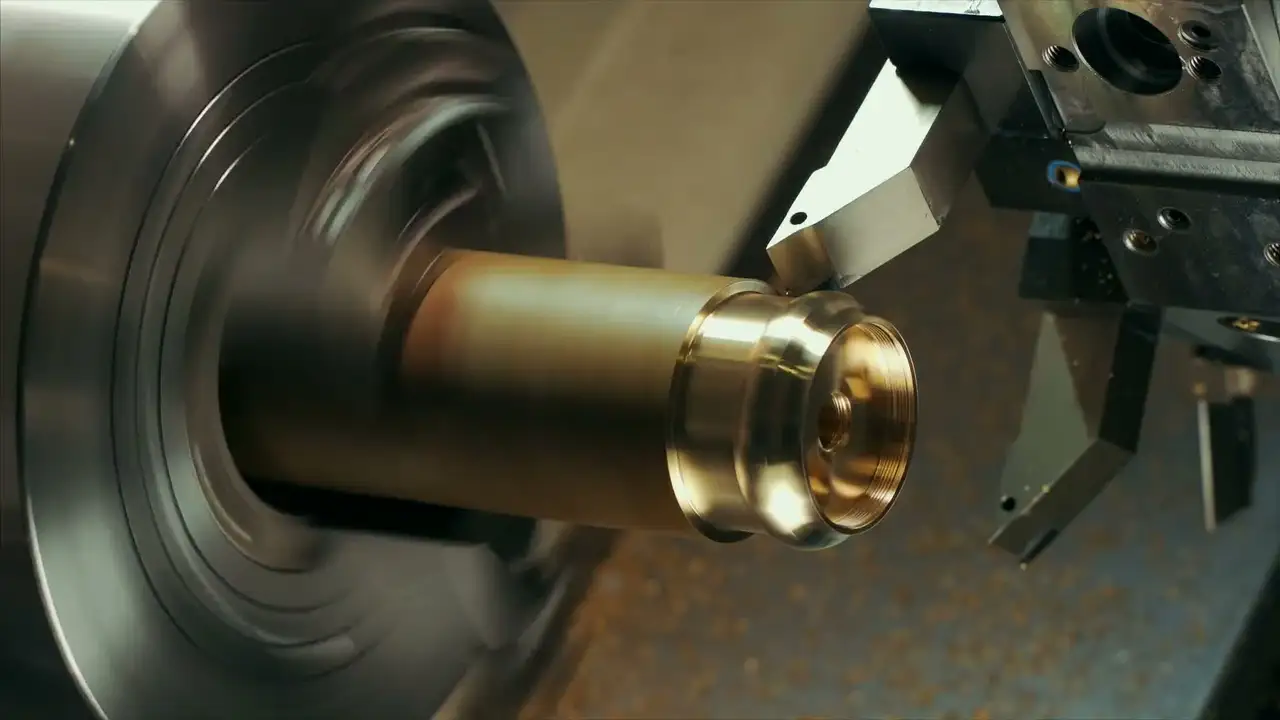
Start with your CAD file
Upload. Configure. Get your price.
STEP or STP
Encrypted · Max. 50 MB
What Is CNC Turning?
CNC turning is a subtractive process in which a metal or plastic workpiece rotates while a cutting tool removes material. Unlike milling, the part rotates while the tool feeds along it.
This process is highly efficient for cylindrical geometry and can produce precise diameters, shoulders, grooves, bores, and threads with consistent surface quality.
Typical turned parts include shafts, flanges, bushings, pins, nozzles, and fasteners. The process supports both prototypes and repeat production for automotive, aerospace, medical, electronics, and industrial applications.
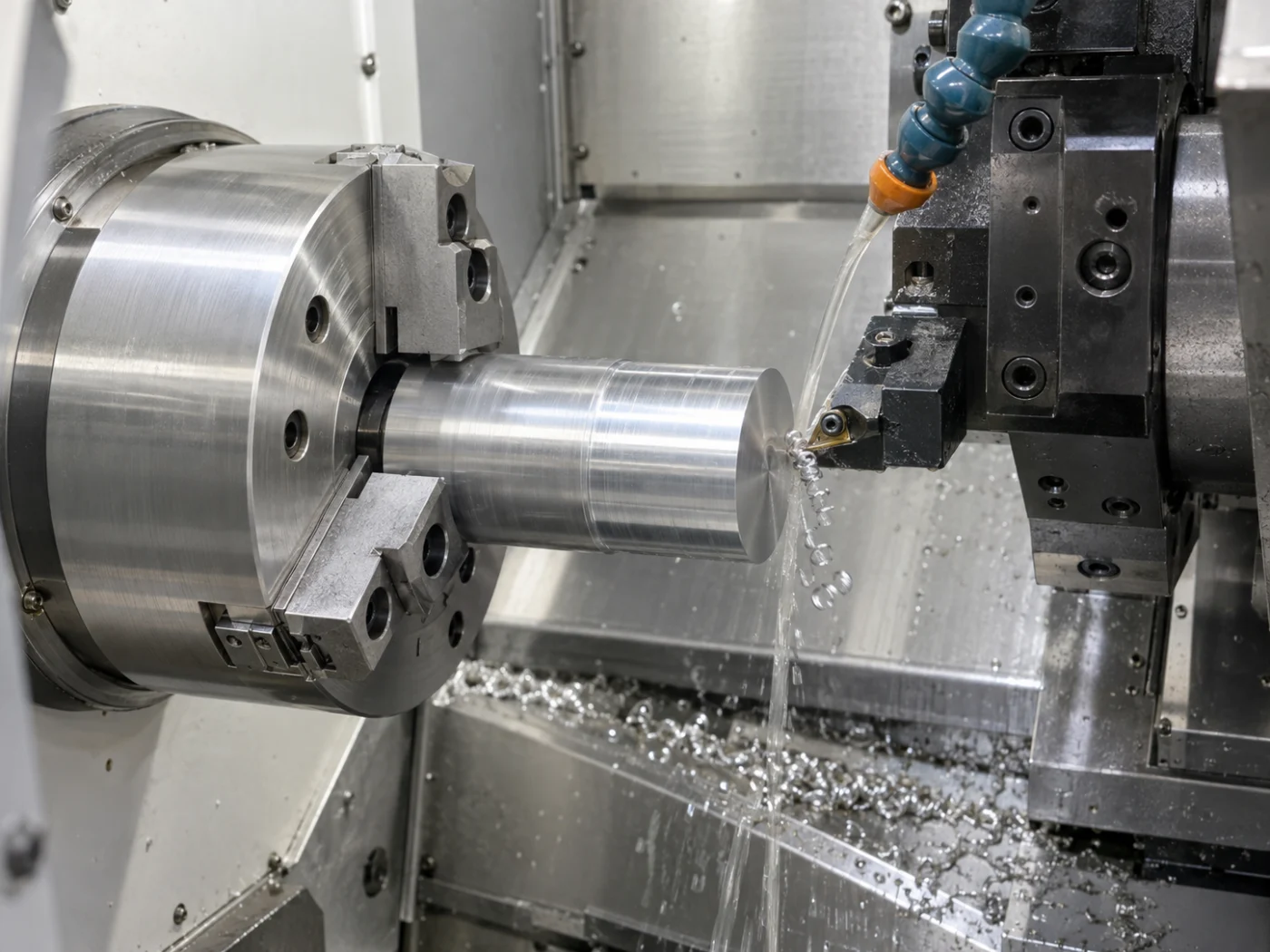
CNC Milling vs. CNC Turning
The right process depends primarily on part geometry, feature access, tolerance, and production requirements.
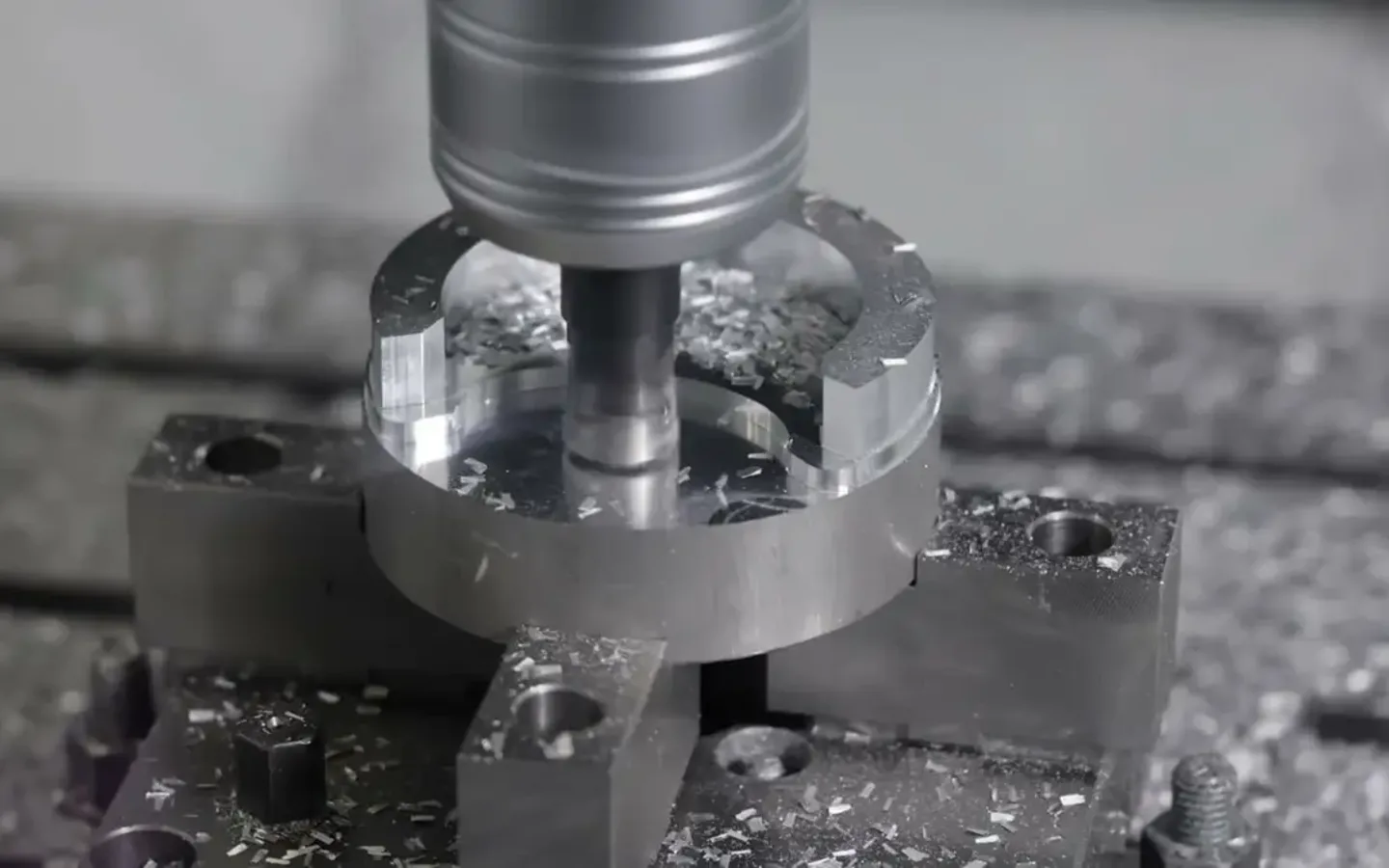
The Tool Rotates
Milling is suited to prismatic geometry, pockets, planar faces, contours, and complex surfaces.
The Part Rotates
Turning is optimized for cylindrical and rotationally symmetric parts such as shafts, bearing seats, and bushings.
CNC Turning Operations
Turning centers support a broad range of operations for external and internal features.
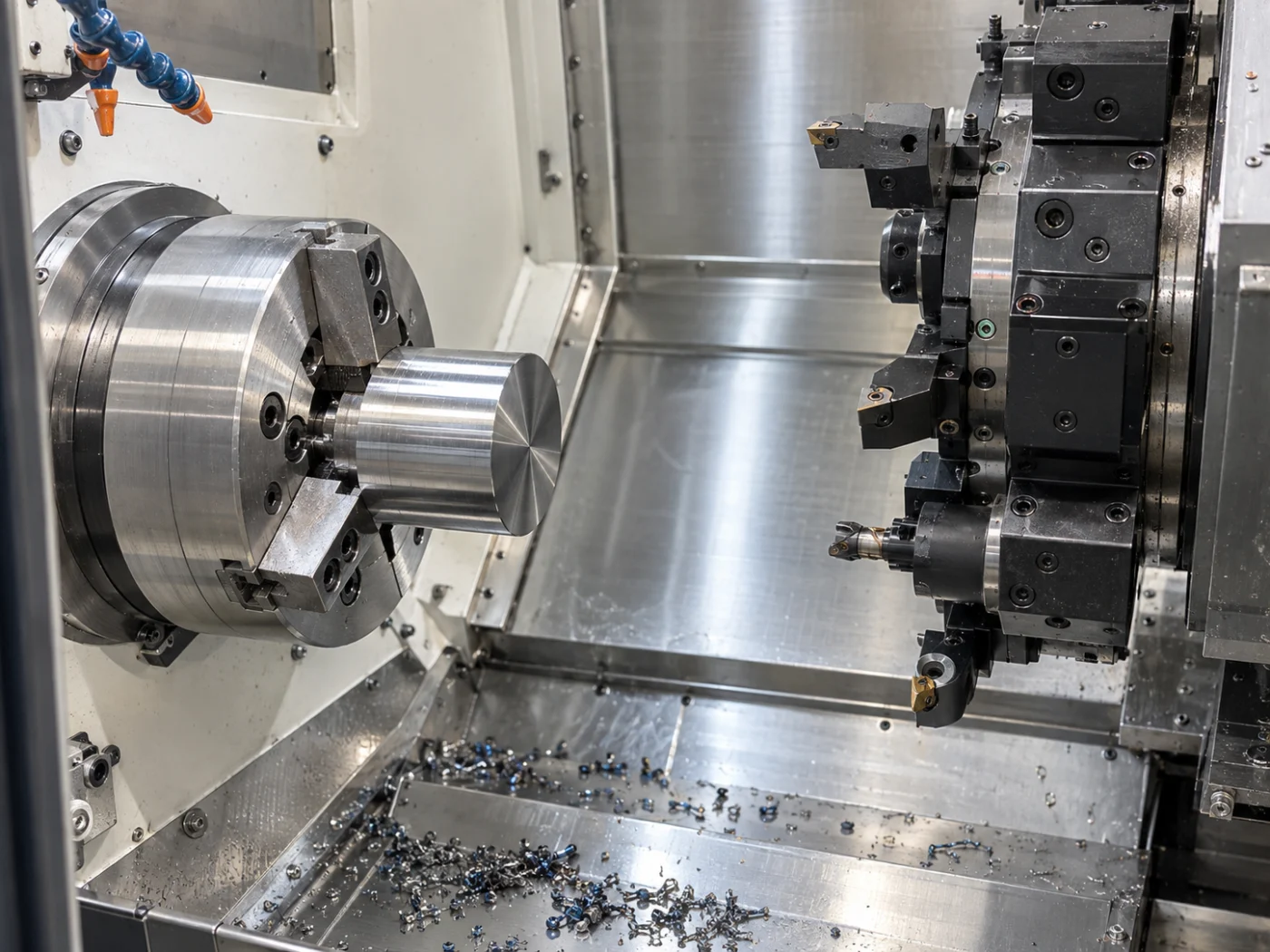
Outside-Diameter Turning
Machines the outside surface into a cylindrical form for shafts, rods, and stepped diameters.
Boring & Internal Turning
Machines bores and internal cylindrical surfaces for bearing seats and precision fits.
Facing
Creates a flat end face used to establish length and reference dimensions.
Threading
Produces metric, UNC, UNF, and custom-profile internal or external threads.
Grooving & Parting
Creates retaining-ring grooves, O-ring grooves, reliefs, and part-off features.
Live Tooling
Adds holes, flats, and milled features on a turning center without moving the part to another machine.
Common CNC-Turned Parts
Turning is ideal for components built around a central axis. These are common examples.
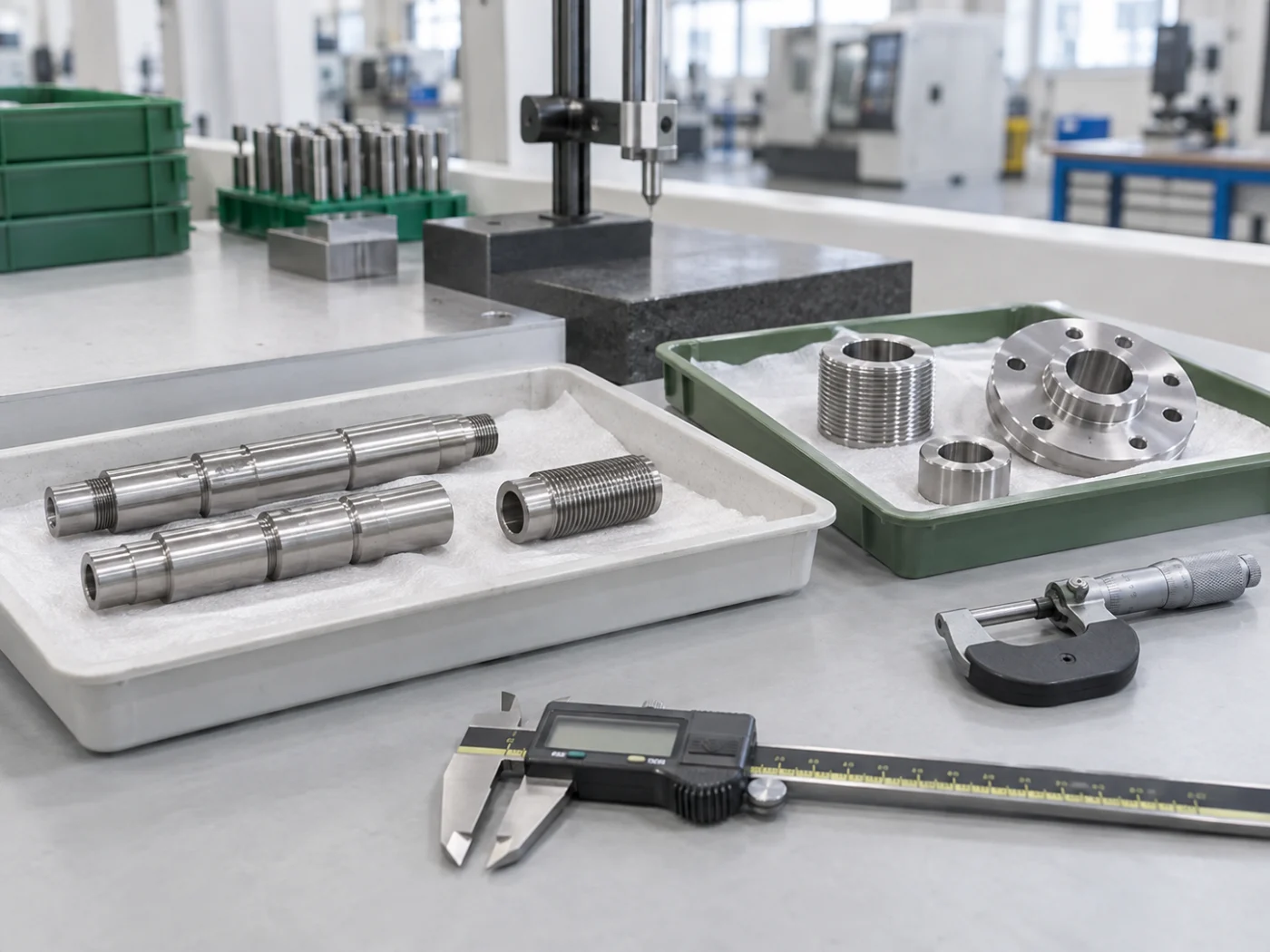
Shafts & Axles
Used to transmit motion and torque, often with bearing seats, pin holes, and threaded features.
Flanges & Couplings
Connection components for piping, shafts, and mechanical assemblies.
Bushings & Sleeves
Cylindrical components used for bearing, alignment, vibration control, and fits.
Custom Fasteners & Pins
Locating pins and fasteners with standard or custom thread profiles.
CNC Turning Capabilities and Tolerances
Representative CNC turning capabilities. Final limits depend on geometry, material, and order requirements.
Design Tips for CNC Turning
Use these guidelines to improve manufacturability and avoid unnecessary turning cost.
Avoid Excessive Length-to-Diameter Ratios
Long, slender parts can deflect and chatter during turning. Consider tailstock or steady-rest support when the geometry requires it.
Add Chamfers or Radii at Shoulders
Sharp transitions between diameters can concentrate stress. A chamfer or small radius improves strength and machinability.
Do Not Leave Groove Roots Undefined
Specify the root radius and profile for retaining-ring and O-ring grooves, especially when sealing performance is critical.
Call Out Fit Tolerances on the Drawing
Use an appropriate fit designation such as H7/g6 for bearing seats, press fits, and sliding fits.
Do Not Omit Secondary Milling Features
Call out keyways, flats, cross holes, and other live-tool or secondary operations in the drawing and order requirements.
Consider Center Holes for Long Shafts
Center holes can enable tailstock-supported machining, improving stability, surface finish, and diameter control.
Frequently asked
questions
Review common questions about CNC Turning. Contact our team when your drawing, material, or inspection requirements need project-specific review.
Can’t find your answer? Send our team the project details and technical files for review.
→ support@partgo.usYour next part starts here
Start building
better parts.
From first prototype to repeat production, tell us what you're building. Our manufacturing team will help you plan the fastest path forward.